


During a person's life, he is exposed to many environmental factors.He does not always eat correctly and rationally, often has bad habits, does not exercise much, or, on the contrary, experiences excessive physical exertion.Of course, the impact of these negative conditions on the body does not go away without consequences.All internal organs and systems suffer, including bones and joint structures, the damage of which can sometimes be very severe.
Many people suffer from joint diseases, and the causes of pathologies are factors such as injuries, infections, age-related changes, autoimmune processes or combinations thereof.If the disease affects the lower limbs, especially the knee joints, the person's motor activity is reduced to the maximum, performance deteriorates, and social adaptation deteriorates.These negative consequences are especially pronounced in the case of knee arthrosis or gonarthrosis, which can result in knee joint disease of any origin.
Characteristics of the disease
The knee joints are constantly exposed to increased physical stress, they provide various human motor activities, so their health and functionality are extremely important.But inflammatory processes of joint tissues (arthritis), metabolic and dystrophic disorders or traumatic injuries, especially if the treatment is started late, can lead to the development of a very dangerous disease, arthrosis or gonarthrosis of the knee joint.
This pathology has a progressive course and is most often diagnosed in old age, which is associated with the accumulation of negative multifactorial effects on the body.However, gonarthrosis can also develop in younger people, especially after serious injuries.
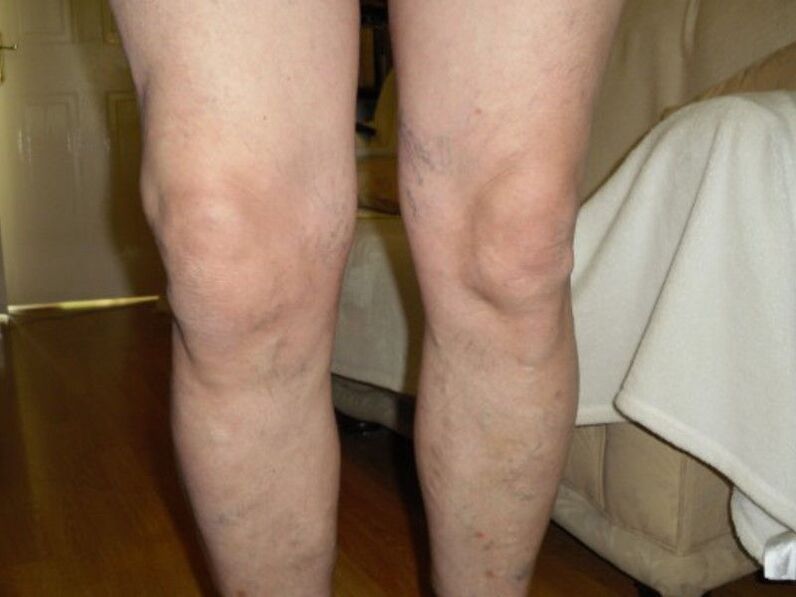
The disease goes through three stages, which are characterized by certain symptoms and can “respond” to treatment methods to varying degrees.This is how gonarthrosis develops (each stage is expressed by the appropriate degree of pathological changes and destruction of the knee joints):
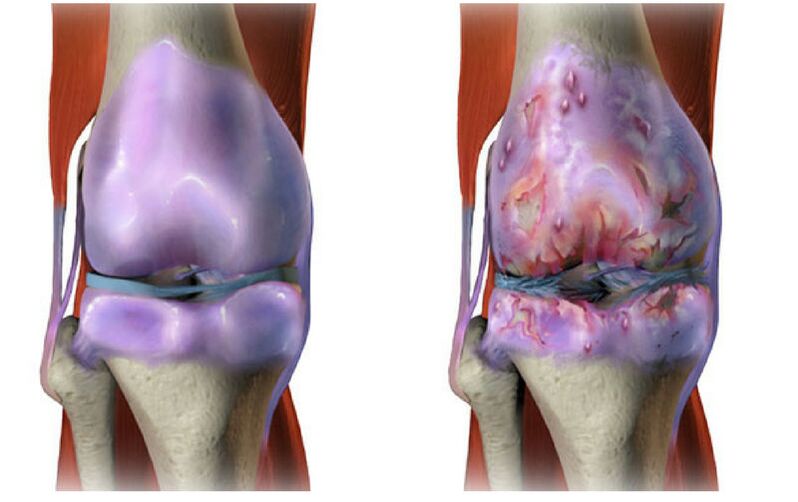
- With first-degree arthrosis of the knee joint, degenerative-dystrophic processes begin in the cartilage layer.
- Stage 2 pathology is characterized by the progressive destruction of cartilage tissue, which is accompanied by the response growth of bone structures with the appearance of so-called osteophytes.At this stage, a person begins to experience knee pain and movement difficulties, so the diagnosis of gonarthrosis occurs in most cases at the second stage of joint destruction.
- Grade 3 is the almost complete absence of the cartilage layer or the presence of individual small fragments of it.As a result, severe deformations of the knee are formed, mobility is lost (which leads to the patient's disability), maximum physical and psychological discomfort and intense pain occur.Due to the active participation of the bone tissue in the pathological process, arthrosis is often called osteoarthritis, and due to the formation of an X- or O-shaped curvature of the lower limbs, it is called deforming osteoarthritis or DOA.
Each stage and degree of the disease is expressed by the growth of destructive processes in the joints, which determines both the therapeutic approach and the selection of the most effective methods.
In addition, the therapeutic tactics are significantly influenced by the form of the disease, which is identified during the diagnostic process.Therefore, in order to achieve the most positive treatment result, it is important to distinguish between the following types of gonarthrosis:
- primary, develops mainly in old age against the background of degenerative changes and is bilateral;
- secondary, it develops against the background of joint pathologies or after injuries (for example, as a result of extensive bleeding inside the joint capsule, hemarthrosis of the knee joint can develop, the treatment of which has its own characteristics).The secondary form is most often unilateral and is diagnosed at any age.
The role of traditional medicine in the treatment of arthrosis
As mentioned above, very serious destructive processes occur with arthrosis changes in the joints.They can start with inflammation, the body's autoimmune reaction, metabolic disorders or traumatic injuries.Unfortunately, gonarthrosis is a chronic and constantly progressing pathology, which does not mean, however, that the painful process cannot be affected by any method that stops or slows down its development.
As the disease progresses and progresses from stage to stage, the influence of provoking and predisposing factors continues.Therefore, the treatment of knee arthrosis, regardless of its origin, should primarily target them.Thus, in acute or indolent forms of the inflammatory process, steroid or non-hormonal anti-inflammatory drugs are needed.Steroids also suppress the immune system, which, together with other groups of immunosuppressants, is essential in the case of arthrosis of autoimmune origin.The initial stages of the destruction of hyaline cartilage can be slowed down by introducing chondroprotective agents into the patient's body, which can partially restore its integrity and functionality.
These methods of treating arthrosis of the knee joint, i.e. certain groups of drugs and drug therapy in general, are in the first place, except in cases of severe gonarthrosis, when only surgical interventions, such as endoprostheses, play a leading role.In addition, with a conservative approach, physiotherapy, physical therapy and massage are effective.What is its role in the treatment of arthrosis of the knee joint with folk remedies, and how effective is it?
Traditional treatment refers to natural, i.e. naturally derived, means, as well as the effect of low or high air temperature and humidity on the human body.In this case, the effect is exerted locally, on certain areas of the skin or its entire area, through the digestive system or the respiratory tract.Of course, the most acceptable of these is the local application of folk remedies for arthrosis, when body lotions or poultices made of plant materials are applied to the knee.
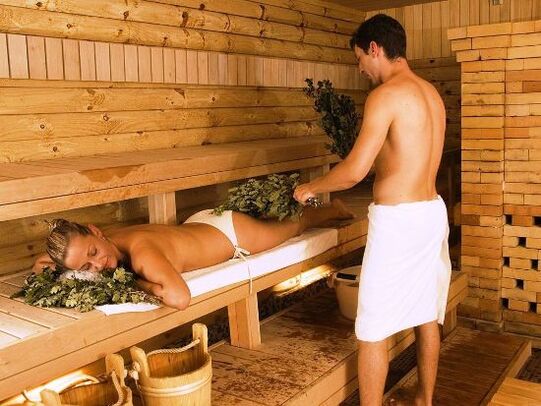
In the meantime, other methods of influencing the patient's body can also be used if the attending physician allows it.Why not warm up in a village bath and inhale the life-giving juniper 'spirit' to restore your defenses and boost your immune system?Or should we not use herbal and berry decoctions, or fruit drinks containing huge amounts of vitamins and biologically active substances, which have a very beneficial effect on all internal organs, not just the joint system?
In general, the treatment of arthrosis of the knee joint with folk remedies, although it does not directly affect the cause and source of the pathology, pursues certain goals, which are no less significant than drug therapy:
- maintaining immunity in a satisfactory condition;
- providing a local anti-inflammatory effect on joint structures;
- mild stimulation of regeneration processes;
- additional positive effect on other internal organs and systems.
Therefore, the treatment of deforming arthrosis of the knee joint with folk remedies, as well as other types of this pathology, always belong to a comprehensive and strictly individual treatment regimen.It plays the role of an auxiliary and complementary method, which traditionally has great psychological significance for patients.The use of all kinds of folk remedies, even in very severe stages of gonarthrosis, when there is practically no real therapeutic help, can still improve the psycho-emotional mood of a person, lift the mood and give hope for recovery.And the psychological understanding of the disease and its causes, as is known, is the background of the psychosomatic approach to therapy, which cannot be ignored.
However, it is still better not to use these well-known traditional remedies on their own, without taking into account the necessary doses, frequency of administration and duration of the course.It is important that the treatment of gonarthrosis of the knee joint with folk remedies, the intensity and the choice of a specific method are approved or recommended by a specialist.Only a doctor dealing with joint diseases knows exactly how to treat arthrosis of the knee joint with folk remedies, at which stage it is necessary to do this, and at which stage it is practically ineffective.
A specialist in the treatment of joint diseases or folk remedies can give the following recommendations to the patient:
- Be sure to consult a doctor before using this method for the first time;
- before introducing a drug into the regimen, do a tolerance test (for external use) - apply the ointment or solution to the skin of the inner forearm, leave it for 1-2 hours and see the result (if there is no change, then you can use it safely);
- do not prepare drugs for future use as much as possible - for 1-2 days (except for products containing ethyl alcohol), observing the storage rules;
- strictly observe the dosage, frequency of administration and duration of the course;
- If adverse reactions occur, stop using the method immediately and consult a doctor.
Every doctor knows that the earlier the therapy starts, the more successful the result will be.This fully applies to gonarthrosis: the use of a conservative approach, including a folk approach, makes sense in stages 1-2 of the pathology.In the third stage, when the hyaline cartilage no longer exists in the joint and permanent osteo-fibrous deformities develop, complete healing of the disease is no longer possible, and the treatment of arthrosis of the knee joints with folk remedies only serves a supporting psychological function.
Methods of traditional medicine
The most common methods and recipes are used to relieve pain, reduce the swelling of the knee and thereby restore the functionality of the joints.The ingredients belonging to them are only of natural origin, which can be prepared independently or purchased at a pharmacy.
The following methods are mainly used to treat osteoarthritis of the knee joint:
- compress;
- ointments and rubs;
- decoctions and infusions;
- spas.
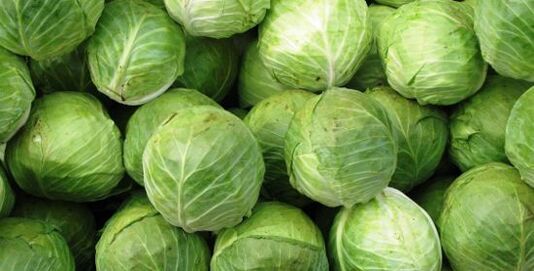
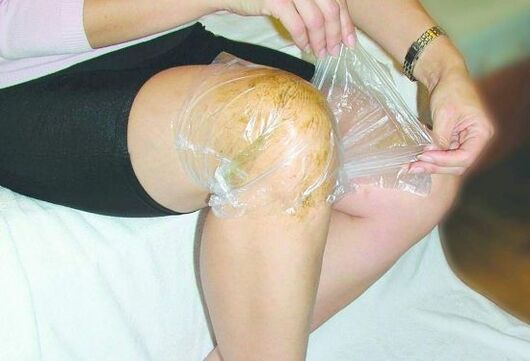
When applying poultices, the combined effect of plant materials and the elevated temperature created by the insulating layer is important.All types of poultices are best used at night, when the knee joint is at rest, and 7-8 hours of sleep is also sufficient to achieve the greatest possible therapeutic effect.Compresses are usually made once a day for 7-10 days, after a while the course can be repeated.
Various ingredients are used as raw materials for poultices: gelatin, dead bees, iodine, horseradish, kefir, potatoes, propolis with salt, oatmeal.But the most common are vodka and cabbage leaves.Place a piece of cloth soaked in vodka or a hand-rubbed cabbage leaf on the knee, then cover the leg with foil and wrap it with a warm cloth.All warming compresses are pain-relieving, anti-inflammatory and reduce swelling.
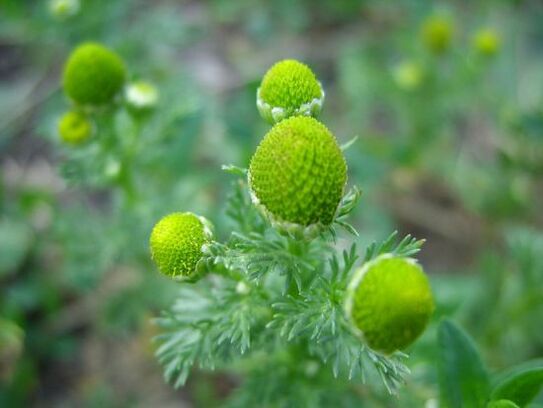
Homemade ointments and rubs provide a local anesthetic effect.For example, an equal number of chamomile flowers, burdock root and calendula flowers are crushed and mixed with vaseline to form a paste-like mass.This ointment is used 4-5 times a day when the patient is bothered by severe pain.
In order to support the body in the fight against arthrosis, you can use decoctions of herbs: cranberry, calendula, St. John's wort, chamomile.The drink is prepared for a day, as its properties are lost during storage.On the contrary, alcoholic tinctures can be stored for a long time and their properties only improve.They can be made from elecampane root, dandelion and golden mustache stem.
Warm baths with string or chamomile and the addition of sea salt perfectly relax the muscles, relieve pain and swelling.After them, patients notice an improvement in their general condition and the mobility of their knees.Therapeutic baths are used once a day, preferably at night.
Patient reviews
Every patient, after asking for help, receives from the doctor a treatment plan for arthrosis of the knee joint, which also includes traditional methods.The impressions of their use are generally positive, here are some of them:
- Woman, 58 years old: "I've been suffering from deforming gonarthrosis for almost 10 years, I'm constantly doing the treatments. My doctor always says that the joints like heat, so I apply warm compresses to my knees according to a specific pattern. They really relieve the pain and help me move."
- Male, 61 years old: "My mother also used pine oil for joint pain. Now that I have bilateral arthrosis in my knees, I use her experience. I rub the oil well into my knees, wrap it in a warm scarf, and go to bed."
- Woman: 50 years old: "I would like to recommend a recipe for an anti-arthrosis ointment, which helps me a lot. Grind 5-6 bay leaves, grind 1 teaspoon of pine needles or juniper berries and mix with 100 g of butter. Rub into painful joints before going to bed. The pain and swelling will gradually go away."
Gonarthrosis therapy always takes a long time and requires persistence and patience.It is important to follow all the doctor's instructions and regularly use alternative treatment courses.Only in this case will a positive result be noticeable.