


Osteochondrosis is a disease of our time.A sedentary lifestyle and constant nervous tension do not go away without a trace.Almost everyone can observe the symptoms of this disease.How to recognize an insidious disease and ask for help in time?
Osteochondrosis is a physiological process that every person acquires during his life.The symptoms and treatment of cervical osteochondrosis are very diverse, so it becomes a disease only under certain circumstances and in combination with certain factors.The disease is characterized by local changes in the bone tissue of the cervical spine due to calcium deficiency.Calcium is depleted, the tissue takes on a spongy structure, becomes fragile, fragile, and performs the main function of the skeleton.
Symptoms of cervical osteochondrosis
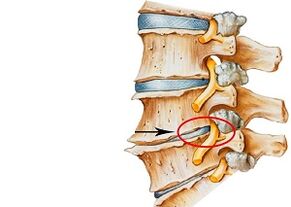
In the case of cervical osteochondrosis, the blood supply to the brain is interrupted.Therefore, almost all patients complain of similar symptoms:
- headache, dizziness, tinnitus;
- pain occurs in the shoulder, neck, chest;
- individual parts of the body (hands, fingers) become numb;
- weakness in the arms and legs;
- psychological symptoms – mood swings for no reason, irritability;
- in difficult situations, vision and hearing deteriorate.
The symptoms are so varied and individual that it is difficult to identify cervical osteochondrosis based only on the patient's complaints.Diseases of the cervical spine are diagnosed using MRI, computed tomography and X-rays.According to the results of the examination, changes are visible in the spine.A diagnosis of cervical osteochondrosis is made only after taking into account all the complaints.
Depending on the location of cervical osteochondrosis, the symptoms and treatment are somewhat different.According to exactly where the change occurred and how it affects the central nervous system, osteochondrosis can be divided into three main groups.These varieties have different symptoms and correspondingly different treatment.
- First group.The peripheral nervous system suffers.Changes in the vertebrae directly affect the nerve endings (roots).It is often called cervicothoracic osteochondrosis with radicular syndrome and has the most prominent symptoms:
- Pain spreading from the neck region to the shoulder area.
- Suffocation syndrome in the neck, tachycardia, heart pain.
- Crackling, noise, cracking when turning the neck.See what exercises to do to strengthen neck muscles with osteochondrosis.
- Constant pain in the back of the head.
- Due to the deterioration of blood circulation, the hands become pale, cold, and the fingers become numb.
- Joint pain.
- Second group.The entire spinal cord is affected, and the disease manifests itself in such a way that it disrupts its entire function.Symptoms include:
- The muscle tone of the legs and arms decreases.The legs become numb, they tire quickly, it is difficult to walk and stand, this is due to the semiconductor disorder syndrome.Blood flows poorly to the lateral columns of the spinal cord.
- Myelopathy develops in the affected areas.Affects limb dysfunction.
- Third group.Brain function is disrupted due to poor blood supply to the brain.It differs in characteristic syndromes:
- Hypothalamus.A syndrome characterized by hypothalamic dysfunction.It is associated with neurological symptoms.The patient often feels unreasonably tired, irritable, and has sudden mood swings.People with this syndrome complain of poor sleep, anger, unreasonable fear and anxiety.Physiological changes include: sweating, pallor, cold palms, high blood pressure.
- Drop syndrome.With this disease of the cervical spine, people often faint for no reason.The cause is vascular spasms.
- Vestibular stem.The syndrome is characterized by frequent dizziness.The function of the vestibular apparatus is interrupted due to insufficient blood flow.Sometimes nausea occurs, which causes vomiting.
- Cochlear trunk.Ringing and tinnitus are called this syndrome.Possible ear congestion or hearing loss.It is very difficult to associate such symptoms with osteochondrosis of the cervical spine, even less to prescribe the appropriate treatment
- Pharyngolaryngeal.The syndrome is accompanied by an unpleasant feeling in the throat.Swallowing can be difficult and the voice becomes hoarse.Painful symptoms such as dryness, itching, pain in the throat are observed.
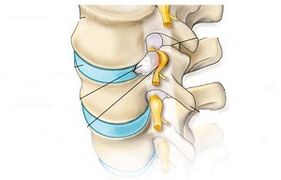
Such osteochondrosis can be the cause of torticollis
Features of osteochondrosis with treatment of symptoms of radicular syndrome
It is especially worth dealing with the radicular syndrome of the cervical spine, the symptoms of which must be taken into account in more detail.Their manifestations are often confused with diseases that are not related to osteochondrosis.The treatment does not work, the person continues to feel pain and their condition worsens.An incorrect diagnosis can sometimes be worse than the disease itself.The prescribed therapy not only does not help, but also paralyzes perfectly healthy organs.The development of osteochondrosis of the cervical spine provokes the appearance of the so-called radicular syndrome.
The main reason is the compression of nerves, especially their roots in a certain part of the spine (cervical, thoracic, vertebra).
This syndrome in the cervical spine is characterized by:
- Pain when rotating the neck or trunk.It appears after a long monotonous body position (sleeping, prolonged sitting) and a sudden head turn.
- Numbness and "goosebumps" in the occipital area.
- Headache in various manifestations: throbbing, sharp short-term, long-lasting.This leads to dizziness, fainting and nausea.
- The muscles in the chin may sag slightly.
- In case of frequent pain, a decrease in the tone of the tongue is observed and speech errors appear.
- Neck pain gradually spreads to the shoulder, forearm and hand.Numbness in the fingers, discomfort when raising the arm, and pain in the joints.
Radicular syndrome of the cervical spine often passes smoothly into the thoracic spine.In cervical-thoracic osteochondrosis with radicular syndrome, the pain is acute, immediate, and manifests itself in the internal organs.
The clinical picture looks like this:
- Pain in the shoulder blade, lower ribs, armpit.Numbness in these areas.
- Painful stabbing sensation in the stomach, intestines, under the ribs.Often observing this syndrome, diseases of the digestive system are misdiagnosed.
- Numbness from the navel to the loins along the back wall of the spine, causing difficulty in the bowels and stomach.
- Dry throat.
Radicular changes can cause cardinal syndrome - a disorder of bone tissue causes irritation of the roots of the pectoral muscle or diaphragm.Its occurrence is indicated by: heartaches of varying duration, from sharp stabbing to long-lasting pains, tachycardia, shortness of breath.These signs exactly repeat the symptoms of angina pectoris.And if you treat it, the result will be zero.In addition, patients with this syndrome have a normal cardiogram and, apart from pain, other signs of heart disease are not observed.Therefore, coronary drugs are ineffective.
Treatment of cervical osteochondrosis
Effective treatment is complex therapy, which should be carried out not only during exacerbation.
Drug treatment

- The pain syndrome is relieved by pain relievers and other pain relievers.
- In case of severe pain, anti-inflammatory drugs are prescribed.
- Local pain relievers in the form of warming ointments and gels will be helpful.
- If there is reference muscle spasm, take muscle relaxants.
- Prescribed drugs that improve cerebral circulation for cervical osteochondrosis.
- Blocking painkillers is also used in medical practice.
- If necessary, anticonvulsant drugs are prescribed.
- Antidepressants, sedatives, and anti-insomnia medications would be helpful for mental disorders.
In addition to medication, the following have a fairly positive effect:
- massages,
- therapeutic exercises;
- electrophoresis;
- wears a bandage.
The main methods of treatment are surgical removal of hernias and other spinal defects.