


Thanks to healthy intervertebral discs, which play a shock-absorbing role in the spine, human movement is easy and relaxed.You don't have to think about your movements or calculate them to cause the least amount of pain.
Over time, as well as under the influence of some other factors, the intervertebral discs wear out and deform, which causes a disease such as osteochondrosis.The disease is divided into zones of spread depending on the location of the disc deformation.The most common is cervical osteochondrosis.
Cervical osteochondrosis, symptoms, home treatment - this is the topic of the article, the materials of which do not contradict official medicine.
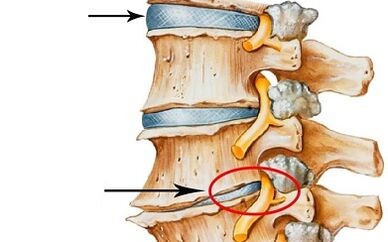
Destructive changes in the intervertebral discs can be observed after the age of 20, when the natural hydration of tissues and organs begins to decrease.Due to the gradual loss of moisture, the volume of the discs decreases and the distance between the vertebrae decreases.
When this distance decreases to such an extent that the vertebrae begin to touch each other, causing pain, it is called osteochondrosis ("osteo" - bone, "chondro" - connective tissue), that is, a disease of the connective tissue between the vertebrae.The process of development of pathology takes years, even decades.
This can be facilitated (or accelerated) by the following factors:
- characteristics of a profession that requires the body to be fixed in a certain position for a long time: assembly line workers, drivers, painters;
- sedentary lifestyle, physical inactivity, sedentary work;
- long-term fixation of the body in certain positions: incorrect posture while sitting at the table, incorrect posture while sleeping;
- excessive physical activity to which athletes, dancers, acrobats and loaders are exposed;
- frequent intoxications of the body, which also have a destructive effect on the intervertebral discs.These include frequent colds, bad habits;
- flat feet;
- back injuries resulting in disruption of the integrity of the intervertebral discs.
Symptoms
Cervicothoracic spine symptoms are traditionally divided into three groups:
- Painful feelingsthey appear as pain in the upper back, neck and back of the head.The pain may be clearly localized or may radiate to the arm.Depending on which vertebra of the disc is damaged, radiation (spreading) of the pain may occur in the left or right arm - both in the area of the forearm and along the entire length of the arm up to the fingertips.The pain can be constant, or it can occur occasionally due to certain factors, especially movement.
- Movement disorders.After a long life with osteochondrosis, people develop motor stereotypes, which leads to the development of movement disorders.For example, if pain occurs when turning the head to the left, the patient tries to turn the head as little as possible to the left, which is a mistake.Over time, turning the neck to the left becomes as impossible as bending the knee in the opposite direction.Additional symptoms appear in the form of numbness of the fingers, hands and the lateral surface of the forearm.
- Vegetavascular manifestationsOsteochondrosis develops as a result of spasm of blood vessels or even cervical arteries compressed by the vertebrae, which causes migraines and dizziness."floating" in the eyes, noise or congestion in the ears.On the part of the central nervous system, asthenia, bad mood, weakness, drowsiness and chronic fatigue are observed.And if the vertebral artery syndrome is expressed in cervical osteochondrosis, it is accompanied by increased blood pressure and headaches, often severe headaches.
If osteochondrosis itself progresses slowly, almost imperceptibly for the patient, then its exacerbations (intervertebral hernia, sciatica) cause great physical suffering to the patient, limit movement and significantly impair the quality of life.Due to the severe pain that occurs during an exacerbation, even a basic visit to a health care facility can become an impossible task.
When an ambulance is called at home, the patient is given an injection of painkillers, given a warning card with an imprecise, vague diagnosis: "vertebral sciatica", and is advised to see a neurologist at the clinic.You still have to go to the clinic!
Currently, osteochondrosis of the cervical and thoracic spine cannot be cured, like osteochondrosis of other areas of the spine, but preventive measures and folk remedies combined with traditional treatment stop the development of the disease, prolong periods of remission, and relieve symptoms during exacerbations.
Treatment of osteochondrosis should be comprehensive, combining the methods of traditional medicine and folk methods.Examination in the clinic is necessary to accurately determine osteochondrosis, and there is no other disease.After all, shoulder pain can occur not only with osteochondrosis, but also with heart diseases that require other, often emergency, treatment.
Drug treatment
The most effective way to relieve acute back pain is to block it with anesthetics.But first you need to do an MRI of the upper spine, which is the most informative diagnostic method today.Depending on the results of the examination, the specialist prescribes medication and physiotherapy.
Medication includes nonsteroidal anti-inflammatory drugs (NSAIDs) in the form of injections, tablets, or ointments.
Chondroprotective drugs are prescribed to support the therapy.
Vitamin-mineral complexes are prescribed to relieve symptoms such as numbness, goosebumps under the skin, chills, and to enhance the effect of drugs belonging to the above groups.
Therapeutic gymnastics
As part of the physical procedures, the patient prescribes therapeutic exercises that can be performed at home.At first, it is recommended to visit a medical institution.This is necessary to remember the exercises and how to perform them.Not all exercises can be performed with osteochondrosis.A properly selected series of exercises helps to strengthen the muscles of the back and neck and stabilizes the functions of the spine.
The exercises will be stretching the back: hanging on the horizontal bar, freezing in certain poses.Stretching the back releases the nerve roots trapped by the vertebrae, thus relieving the pain.Pulling exercises, strength exercises, running and bending to the side are prohibited.
Swimming is another form of physical activity that produces quick and long-term results.Swimming, crawling or breaststroke is the most suitable method for patients with osteochondrosis of the cervical or thoracic spine.You can learn them by purchasing a gym membership.In the warm season, you can practice in local reservoirs.
Gymnastics is prohibited during acute pain!Only after getting up in the morning should you hang on a horizontal bar or a cross bar with your arms outstretched;the strongest pain is felt in the morning, after sleep, after staying in one position for a long time.
Nutrition for osteochondrosis

There is no special diet for osteochondrosis, but certain foods improve the metabolic processes in the disc, which forms the lining of the intervertebral disc.
These products are: meat and fish, fruits and vegetables, nuts, herbs, dairy products, eggs.
During exacerbations, it is recommended to exclude:
- sweet,
- flour and limit the consumption of cereals,
- salt and spices.
You should drink at least 2 liters of clean water per day.Water cannot be replaced with coffee, fruit juices, carbonated drinks and alkaline mineral waters.Adding dandelion syrup to water at the rate of 1 teaspoon per glass is very helpful.
Making the syrup is not difficult: add 350 grams of dandelion flowers and two chopped lemons with water (to cover) and boil for half an hour.Then filter it and pour one kilogram of sugar into the resulting broth, dissolve it over a slow fire while stirring.The amount received is sufficient for an entire course.Dandelion syrup helps retain moisture in the cartilaginous tissues of the body.
Cinquefoil's beneficial effects on the musculoskeletal system are known to reduce inflammation.
Sabelnik is available in herbal pharmacies.Fill a glass bottle 2/3 full with grass, pour alcohol or vodka under the cap.Infuse, then store in a dark place for 2 weeks.
Take 10-15 drops with water in the morning.within a month or two.You can repeat the course twice a year.The same cinquefoil tincture can be used as a poultice on the sore neck area.
There is a known correlation between the poor condition of the intervertebral discs and being overweight, which increases the load.Therefore, if you are overweight, it is wise to choose a low-calorie diet to lose weight.
Massage
In osteochondrosis of the cervical and thoracic spine, especially if it is caused by physical inactivity and a sedentary lifestyle, massage helps.The patient lies prone on the couch with his chin hanging over the edge of the couch.Another family member kneads the back muscles with circular movements of his fingers.You should feel the muscles rolling under your fingers.The masseuse then places his right palm on the spine, applies slight pressure from above with his left palm and carefully slides along the spine from the base of the skull to the tailbone.
The last stage of the massage will be rubbing the skin of the back with a special composition.In the old days, people used equal amounts of vegetable oil (raw, cold-pressed) and sea salt to make it.The components are stirred at regular intervals for three days and the mixture is stored at room temperature.On the third day, the preparation is ready for use.When buying sea salt, it is important to pay attention to the composition: there should be no coloring, flavoring or other additives.
The back is rubbed with this composition daily, starting from three minutes.The duration of the session increases by one minute every day and reaches twenty.After massaging, rinse off the mixture as usual with any detergent.Thus, the course lasts two weeks.As a result, the condition of the tissues near the back and spine improves.This method is especially helpful when the vertebral artery syndrome is observed in cervical osteochondrosis, with increased blood pressure and migraine.
Applications and compressions
In osteochondrosis, damaged discs are often exposed to calcification and salt accumulation.Adjacent tissues are also sensitive to this process, which causes severe pain with unsuccessful or sudden movements.Applications according to folk recipes help to dissolve these salts.
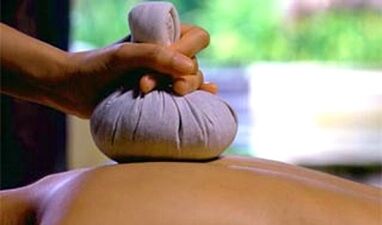
A batter of rye flour, pharmaceutical turpentine, and oleoresin is mixed until it reaches the consistency of pie dough.It should stand at room temperature for two days.After two days, the patient should drink a glass of milk, and apply cakes from the obtained dough to the painful places, fix them with cellophane and wrap them with a towel on top.Leave it on all night.Repeat the application 2-3 times a week.
The recipe for a mixture intended for another application is gentler and does not irritate the skin as much, but the disadvantage is that the therapeutic effect does not start so quickly: a tablespoon of flour, 100 grams of ghee and a tablespoon of 9% vinegar are mixed.This dough is also used to make flatbreads, which are applied to the painful area.
For the treatment of osteochondrosis, poultices are often and successfully used in folk medicine:
- a glass of honey
- 2 glasses of radish juice,
- half a glass of alcohol,
- mix everything and use it as a poultice on the sore spot.
The above recipe for cinquefoil tincture is also good to use for these purposes.
During an exacerbation, it is not worth warming up the painful places, but after the inflammation subsides, a sauna with a broom consolidates the results.First, the body should be covered with a mixture of honey and sea salt in equal proportions.In the case of osteochondrosis, fluid often accumulates in the tissues around the source of inflammation, and this method removes excess fluid from the body.
The best treatment for any disease is prevention.This trite truth fully applies to osteochondrosis of the cervical spine.To prevent the recurrence of pain, strengthen your immune system, organize physical activity in the swimming pool, gym, comfortably arrange your sleeping and working space, and take measures to reduce excess weight, if any.It may even be wise to leave a job that requires excessive physical exertion, because health is more important!